
CT-5
The material discharged behind combines during corn and soybean harvest can be windrowed (laid down in strips) or distributed on the surface with various combine attachments. Uniform distribution of this "surface residue cover" is a worthy goal, because uneven surface residue cover may affect the following:
Every grain combine discharges two streams of material at the back:
Straw - the material which passes through the threshing and separating units of the combine. It consists of corn cobs, husks, and some cornstalk pieces; or soybean stalks and threshed bean pods.
Chaff- the material which is blown or otherwise discharged from the cleaning unit (cleaning shoe) of the combine. It contains smaller "chaffy" pieces of plant stalks, cobs, or hulls,
Due to improper adjustment or from a malfunction, both streams of material may also contain some corn or beans; also commonly known as field loss.
The straw discharged from the threshing and separating units of grain combines can be distributed with straw spreader or straw chopper attachments-or a combination of the two (with some combines).
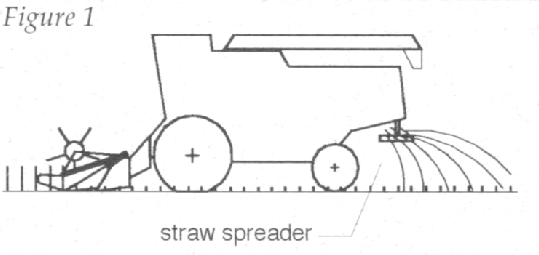
Straw spreaders are attached at the discharge opening and rotate in a horizontal plane (Figure 1). The spinning paddles intercept the exiting stream of straw, and spread the material over a wider area-to each side as well as directly behind the combine. Straw spreaders typically have two side-by- side units rotating in opposite directions at a relatively slow speed (rpm). They usually cause very little breakup of the discharged material.
Straw choppers reduce the size of the straw by chopping it into smaller pieces. Straw choppers have a series of flails or knives mounted on a horizontal shaft or drum (like a flail-type mower or hammermill), rotating at a relatively high speed (rpm).
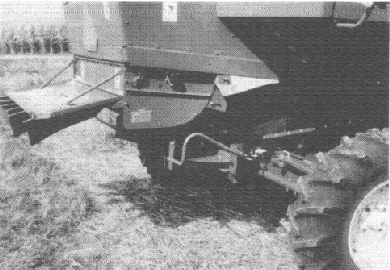
Some straw choppers are mounted externally, as shown in Figure 2. The straw chopper attachment replaces (or occupies the same space used for) the straw spreader attachment. The chopped material passes through deflector fins, which distribute it over a wider swath to the sides and behind the combine. The chopper unit can be slid or rolled forward without removal to accomplish windrowing.
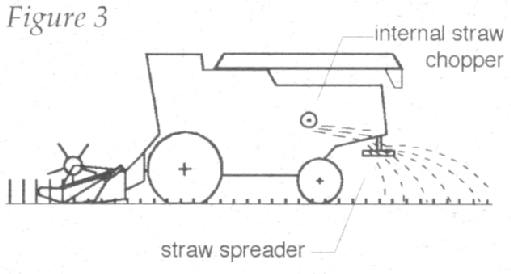
Other straw choppers are mounted internally as on Case-IH combines in Figure 3. The straw chopper is actually the discharge beater drum with stationary knife sections attached. The chopped material is propelled toward the rear (as with the beater) to a deflector, then is dropped onto the straw spreader.
The chaff discharged from cleaning units (cleaning shoes) of grain combines can be distributed over a wider swath with chaff spreader attachments (Figure 4). Chaff spreaders mount just behind and slightly below the rear axle on most combines. A chaff pan (or chaff pan extension) insures that all the chaff from the cleaning shoe reaches the distributor, rather than dropping to the ground in front of the axle.
Like straw spreaders, chaff spreaders consist of paddles rotating on a horizontal plane. Many are single-spinner units, but some have two spinners. The two-spinner versions typically distribute chaff over a wider swath than the single- spinner units. With both types, swath width and distribution patterns can usually be altered somewhat by adjusting:
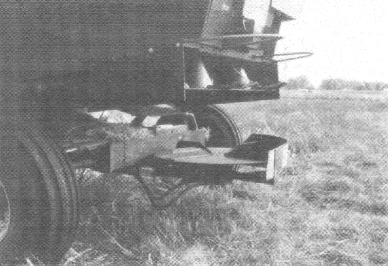
Most chaff spreaders can be unpinned at one side and swung out of the way for cleaning shoe inspection and adjustment during harvesting. Some combine manufacturers offer chaff spreaders as a factory installation option and several units are available for add-on field installation. Most add-ons and some factory installed units are hydraulically-driven.
New 2/95
This information, and reference to commercial products, is provided for educational purposes only. No discrimination is intended and no endorsement by the Purdue University Cooperative Extension Service is implied.
Cooperative Extension work in Agricultural and Home Economics. state of Indiana. Purdue University. and U.S. Department of Agriculture cooperating: H. A. Wadsworth. Director. West Lafayette. IN. Issued in furtherance of the acts of May 8 and June 30. 1914. The Purdue University Cooperative Extension Service is an equal opportunity/equal access institution.