

How Indiana farmers — and you — can keep fresh produce safe to eat
Southern Indiana is a hub for fresh produce, with its farmlands growing 50% of the state’s produce. The region is also a hub for food safety.
Scott Monroe, Purdue Extension food safety specialist, has spent over a decade working with Extension colleagues to research and share food safety best practices with Indiana growers. Monroe is in homebase Vincennes — surrounded by high concentrations of tomatoes, cantaloupe and watermelon producers — where he works closely with Indiana growers to keep food safe from harvest to homes.
What are the risks of fresh produce
Any fresh produce comes with some level of risk because it is purchased raw.
When produce is cooked, it kills harmful pathogens like E. coli, listeria, salmonella and cyclospora. With no “kill step,” it’s especially important to prevent uncooked food’s contact with harmful pathogens.
When fresh produce is handled properly from farm to fork, the risk to consumers is greatly reduced.
How farmers prevent illness at the source
Creating safe, fresh produce starts on farms.
Monroe hosts trainings for producers and farm workers with the Safe Produce Indiana team, comprised of Monroe, Senior Extension Administrator Tari Gary, Professor of Food Science Amanda Deering, and Food Safety Outreach Specialist Katheryn Parraga. The team presents requirements of the Food and Drug Administration’s (FDA's) Food Safety Modernization Act (FSMA), guidelines from the Indiana Department of Health and research about how everyday occurrences on the farm can introduce risk. As Monoe says, the teams strives to be “a one-stop-shop for all things produce food safety.”
 Amanda Deering, left, shares Safe Produce Indiana’s work with Purdue College of Agriculture alumni at the Purdue Ag Alumni Fish Fry.
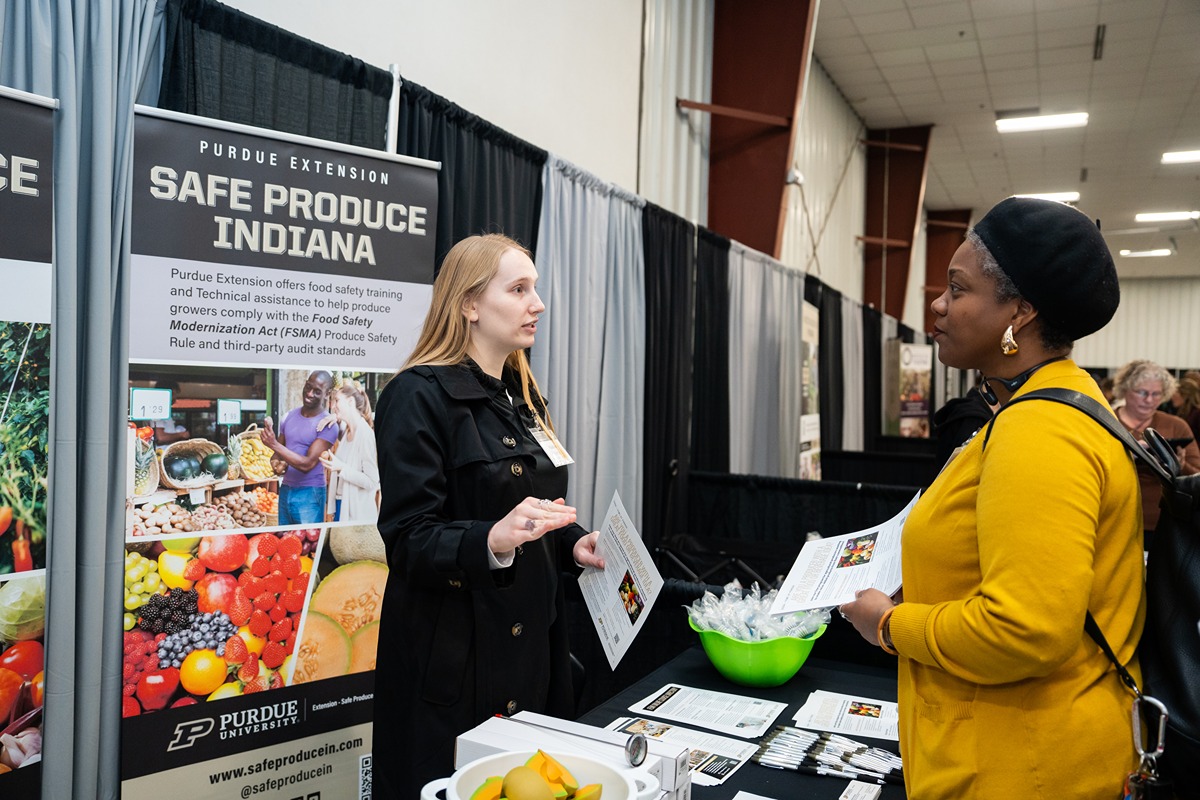 Safe Produce Indiana shares the latest research with producers at events like the Indiana Horticulture and Small Farm Conference.
“We talk to growers about how to control risk in the areas of water, waste, wildlife and workers — what we affectionately call the four W’s,” Monroe said. “If you can control those factors, you go a long way towards reducing the overall risk of something accidentally getting into the food system.”
Growers who attend food safety programming, Gary said, are more conscious of food safety risks on the farm and are more likely to implement mitigation strategies and good agricultural practices. In 2025, 173 growers received a Produce Safety Alliance Grower Training certificate through the FDA-recognized curriculum delivered by Safe Produce Indiana. In course evaluations, 95% of participants agreed or strongly agreed with the statements, “This training increased my knowledge of food safety requirements in the FSMA Produce Safety Rule,” and “I am confident that I can implement practices to address food safety risks.”
Monroe often reminds people that farmers and consumers have the same goal: a quality product with as little risk as possible. “I've never met a farmer who goes out in the morning and says, ‘Yeah, it's a great day to make someone sick.’”
How Consumers can keep produce safe
It’s important for consumers to properly handle fresh produce at home as well.
“People need to understand that fresh produce is essentially a raw agricultural commodity, so it needs to be treated as such,” Monroe said.
How to Handle Fresh Produce Safely at Home
- Wash your hands before handling produce to avoid adding any new contaminants to the food.
- Wash your produce before consuming it, rinsing it under cold, running water.
- For produce with a rough surface or rind, like cantaloupe or watermelon, use a produce brush to remove additional debris and ensure all areas are thoroughly rinsed.
- Avoid cross contamination from foods like raw meats by understanding proper sanitization practices for food contact surfaces. A surface that’s “clean,” with no visible debris, can still harbor bacteria.
- Refer to guidelines from the U. S. Department of Agriculture and FDA to determine the best ways to safely store and prepare produce, whether that’s in your fridge or somewhere else.
Future food safety research
Food safety research ensures that consumers continue to stay safe. The Produce Safety Team continues to research the ways foodborne illnesses spread and what producers and consumers can do to prevent it. Purdue Extension then creates a path for Hoosiers to learn the latest guidance.
The Safe Produce Indiana Team is in the process of scheduling training and programming for the upcoming winter season. For more information about on-farm produce safety, and for a list of upcoming produce safety trainings and programs, please visit https://safeproducein.com.
Featured Stories

“Sanitizing” is different from cleaning. That’s one of the many things people...

Unsure what to make for dinner, you check your kitchen. A loaf of bread. A bag of baby carrots. A...

With fresh, flavorful strawberries in high demand across Indiana so are Purdue Extension...

AI chatbots can provide useful food safety analysis. However, according to an analysis conducted...

Pumpkins gain national spotlight every October. And, every year, Indiana pumpkin pickers trudge...

Keeping young children entertained, especially on cold or rainy days, can be challenging, but...