

Keeping Indiana 4-H youth engaged and safe in a pandemic
T
he COVID-19 pandemic guaranteed this year to be like no other. The pandemic affects people of all ages, but it has been especially challenging for children as schools went virtual and youth organizations were forced to cancel activities and trips. Knowing it is critical for youth to engage in hands-on learning experiences to build life skills, Indiana 4-H was determined to continue reaching youth statewide.
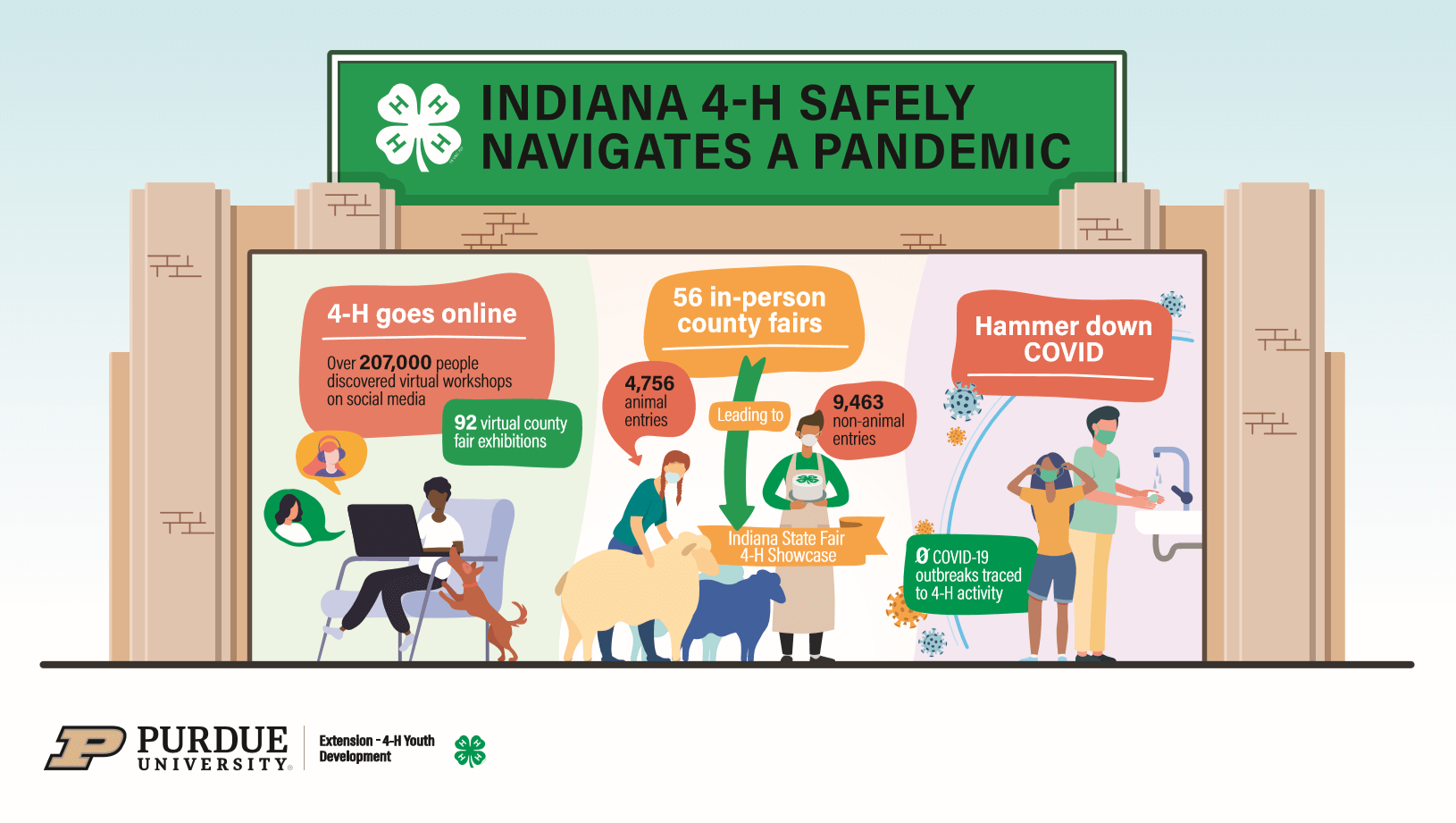
For much of the spring, Indiana 4-H in-person programming was canceled, but the organization adapted many of its popular summer programs to meet youth where they were – at home.
4-H’ers and their families received access to online activities, including an online hackathon and 4-H Academy, a program for high school students to explore educational and career opportunities typically held at Purdue. Youth participated in yoga classes on Facebook and at-home STEM activities and soccer lessons through a video series. Indiana 4-H’s virtual cake decorating workshop reached Zoom’s maximum capacity with 400 participants from across the state and country.
“The learning which occurred this summer looked different, but young people across our state continued to develop mastery in their project areas. This summer allowed the adults who work with youth, staff and volunteers, to develop new skills—like the 4-H’ers. We look forward to adapting what we have learned this year and applying it to the future,” said Casey Mull, assistant director of Extension and 4-H youth development program leader.
In some cases, Indiana 4-H was able to reintroduce in-person events in July. Indiana 4-H Extension educators worked with local health departments and officials to determine if a county fair event could safely be held in-person. In the 56 counties that held in-person fairs, participants wore masks and followed social distancing guidelines. 4-H staff also worked with state officials to safely hold a modified Indiana State Fair 4-H Livestock and Project Showcase, which included a total of 4,756 animal entries and 9,463 non-animal entries. These events were successfully held with no known COVID-19 outbreaks.
“As we look back on the summer and the statewide 4-H showcase, the accomplishments of Purdue Extension and 4-H, in particular, should be celebrated,” said Jason Henderson, senior associate dean and director of Extension. “Almost all other youth events were canceled, but 4-H and Purdue Extension found a way to safely have events in the middle of COVID-19. Through the use of social distancing and masks and with the cooperation of local officials, volunteers, 4-H members and Extension educators, in-person events were held with no known COVID-19 outbreaks.”
Featured Stories

WEST LAFAYETTE, Ind. — Purdue Extension’s EDGE in Ag program recognized three...
![4-H volunteer Kristi Kretzmeier, left, stands with her husband, two daughters, two 4-H youth, and a show sheep. One youth, Kyle Albertson, sits in a motorized wheelchair, and his sheep is held in place[MCM1.1] by a specialized wheelchair attachment.](../../2026/08/_media/4-h-volunteers_mobile-square.jpg)
Summer days are for 4-H in the Kretzmeier household. If you’re looking for Kristi...
WEST LAFAYETTE, Ind. — Purdue University’s Department of Horticulture and Landscape...
WEST LAFAYETTE, Ind. — The Indiana State Fair kicks off Aug. 7 with the theme “Always...
Tom Clements walked into Porter County Aging and Community Services looking for a tutor to help...

With fresh, flavorful strawberries in high demand across Indiana so are Purdue Extension...