Prescribed Fire
What is prescribed fire?
Prescribed fire is a fire that is planned and conducted in a controllable manner to achieve a particular management objective. Prescribed fires are often called ‘controlled burns’ and are set under pre-determined weather conditions to ensure they are conducted safely and meet the management objectives.
Prescribed fires are used to restore natural plant communities, improve forest health, enhance habitat for wildlife, control invasive plants, and many other reasons.

Burning grasslands
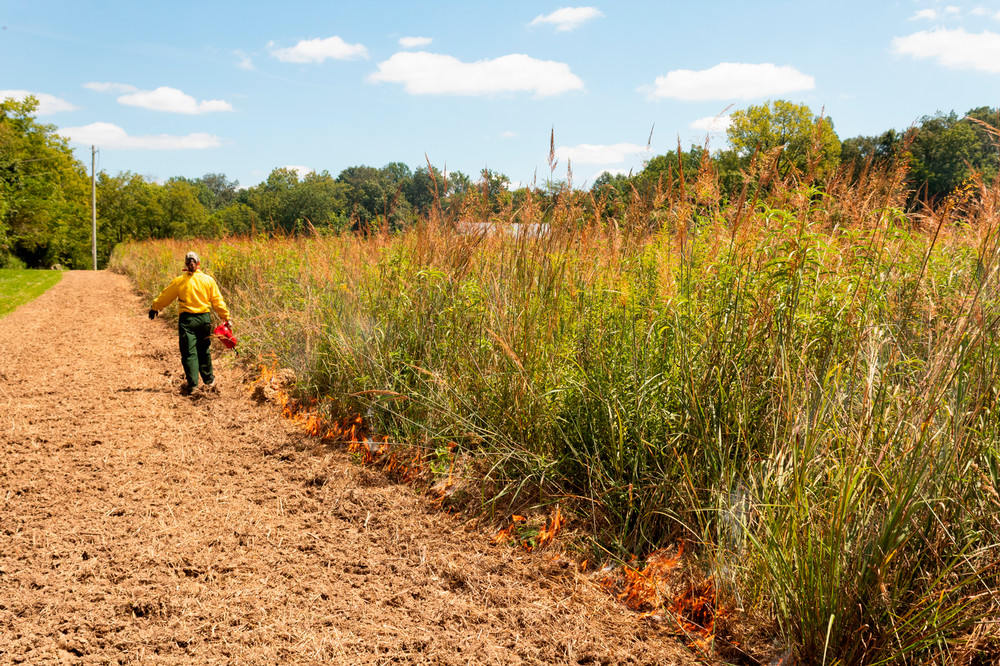
Fire is an important tool in restoring and maintaining grasslands and pollinator plantings. Regular prescribed fire top-kills encroaching trees and shrubs, reduces thatch, and stimulates new growth.
Prescribed fire in grasslands can be implemented in the dormant or growing season, depending on the objectives of the burn. Spring burns stimulate grasses, while late growing season and fall burns are better for knocking back woody vegetation and encouraging the growth of forbs. Winter burns can be useful to facilitate interseeding.
Typically, one-third of a grassland is burned per year to leave plenty of habitat for wildlife. In addition, it is best to avoid late spring and summer when birds are actively nesting.
Burning woodlands
Low-intensity burns benefit woodlands in a variety of ways.
Regular prescribed fire gives oaks and hickories an advantage over shade-tolerant species like maples and beeches. Oaks and hickories are a vital source of food and other resources for a wide variety of wildlife.
Fire also stimulates the forest's understory. A robust community of herbaceous plants is important for pollinators. It also provides food and cover for birds, deer, and more.
Woodland fires are typically conducted during the dormant season, when the leaves are off the trees.
Planning a prescribed fire
Careful planning is required for a successful prescribed fire. It can helpful to seek guidance from a district biologist, forester, or other experienced burner. One good way to get access to expertise, training, and resources is to join a neighbors-helping-neighbors group known as a Prescribed Burn Association (PBA).
Burn plans
The first step in planning a prescribed fire is to develop a burn plan. This document tells the burner what is needed to conduct a safe burn that meets objectives. A burn plan includes maps, objectives, allowable weather conditions, required personnel and equipment, notification information, and more. Fillable burn plan templates are available online.
Site preparation
Before a burn can take place, the site must be prepared. This means installing appropriate firebreaks that are wide enough to prevent unwanted spread and free of fuel. The size and type of firebreak depends on many factors, including fuel type and available resources.
If burning in a woodland, it is prudent to leaf blow around snags near the fireline or fell them. If valuable timber trees are a concern, managers may choose to remove fuel around their bases.
equipment
Basic burn equipment includes drip torches to ignite the fire, rakes and other hand tools, and either a vehicle with a spray rig or backpack sprayers. Burners also need to have appropriate personal protective equipment - natural fiber clothing like cotton or wool (no synthetic fibers) or Nomex, leather boots with no steel toe, a hardhat, leather gloves, and safety glasses.